


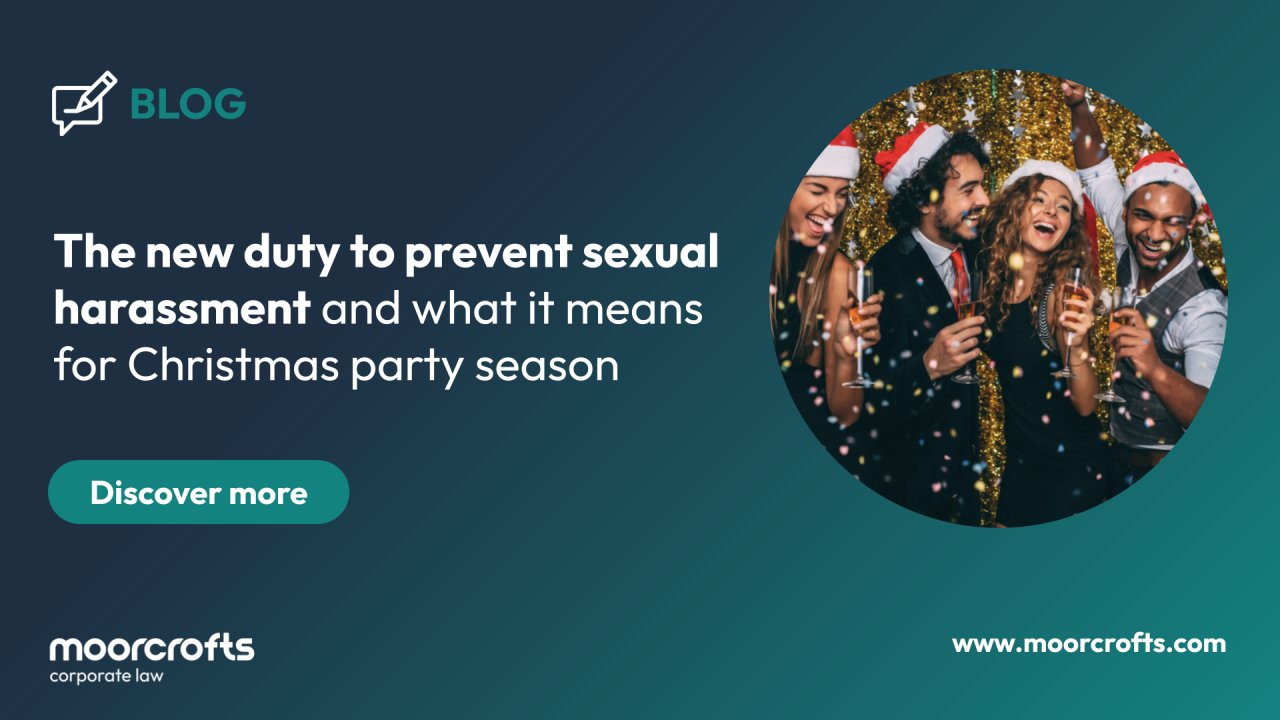
The new duty to prevent sexual harassment and what it means for Christmas party season
The festive season is upon us, and with it, comes the annual workplace Christmas party – a time to celebrate, relax, and connect with colleagues. However, with the introduction of the Worker Protection (Amendment of Equality Act) Act 2023, employers now have a new legal duty to take reasonable steps to prevent sexual harassment, making it even more important to approach this year’s celebrations with care.
The new duty, which came into force in October this year, requires employers to anticipate potential scenarios of sexual harassment and take proactive measures to prevent them, even if no prior complaints have been made. With the heightened risks associated with workplace events – particularly those involving alcohol – Christmas parties could be a vulnerable spot for employers, under this legislation.
Under the new obligations, employers must take steps to prevent sexual harassment not only between workers but also from third parties such as clients or event staff. This means recognising the risks and introducing measures to address them before they occur. Failure to do so could result in an up to 25% uplift in compensation awarded in tribunal cases involving harassment, as well as reputational damage and potential enforcement action by the Equality and Human Rights Commission (EHRC).
To ensure compliance during the Christmas party season, employers should consider the following steps:
- Review policies and procedures: Ensure your sexual harassment policy is clear, well-communicated, and specifically addresses workplace social events.
It’s worth revisiting the EHRC’s technical guidance, which provides a framework for what constitutes reasonable steps.
- Communicate a clear code of conduct to workers ahead of the Christmas party. Emphasise that the organisation is committed to a respectful environment and that breaches of this standard may result in disciplinary action.
- Provide staff training and ensure workers and managers are trained to recognise and address inappropriate behaviour, particularly in social settings. Training should include bystander intervention techniques and guidance on reporting concerns.
- Plan the event thoughtfully by taking a proactive approach to minimise risks:
- Monitor alcohol consumption by ensuring responsible service.
- Designate managers or HR representatives to oversee the event.
- Choose a venue that provides a safe and professional atmosphere.
5. Engage workers in risk assessments. Employers are now required to conduct risk assessments for sexual harassment, including identifying potential risks at workplace events. Engage employees in the process to understand their concerns and address any vulnerabilities.
- Post-event follow up: After the event, provide workers with reminders about how to report concerns. Consider conducting an anonymous survey to gauge whether employees felt safe and respected during the celebrations.
While many employers already have anti-harassment measures in place, the new duty goes further by requiring active, ongoing compliance. This includes regular risk assessments, monitoring the effectiveness of preventative steps, and maintaining an open dialogue with workers about potential risks.
With the Christmas party presenting a prime environment for potential issues to arise, taking these steps now can help employers avoid legal, reputational, and cultural consequences while ensuring the festive season remains an enjoyable and inclusive time for everyone.
By addressing these risks proactively, you can not only comply with the law but also foster a workplace culture of respect and accountability – and not just for Christmas.
Contact us
For employment law advice, contact our Employment Partner, Lindsey Abbott.